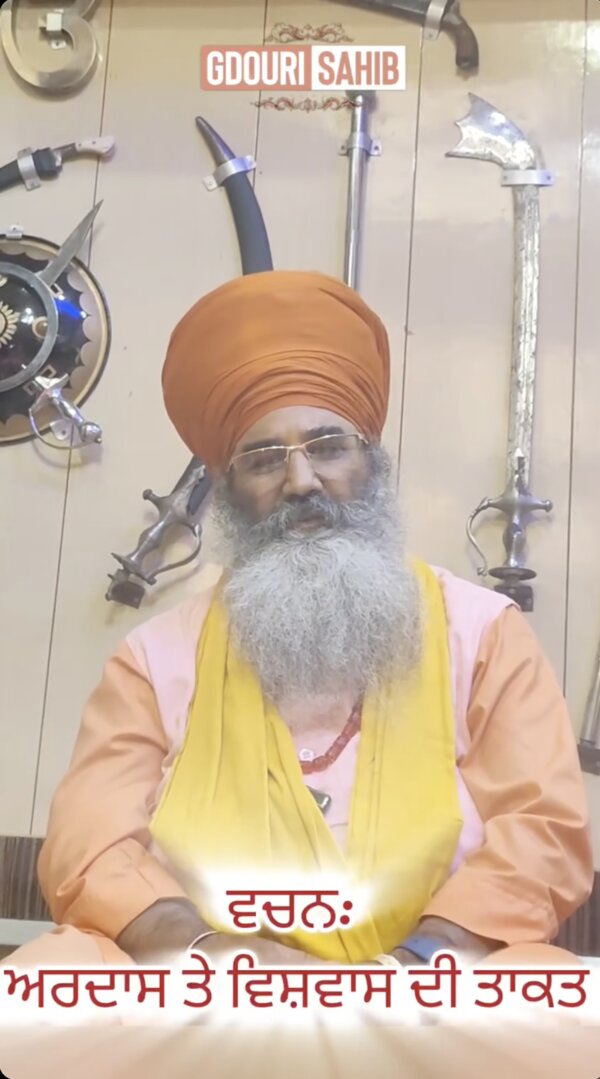
Swami Dayanand Ji Maharaj
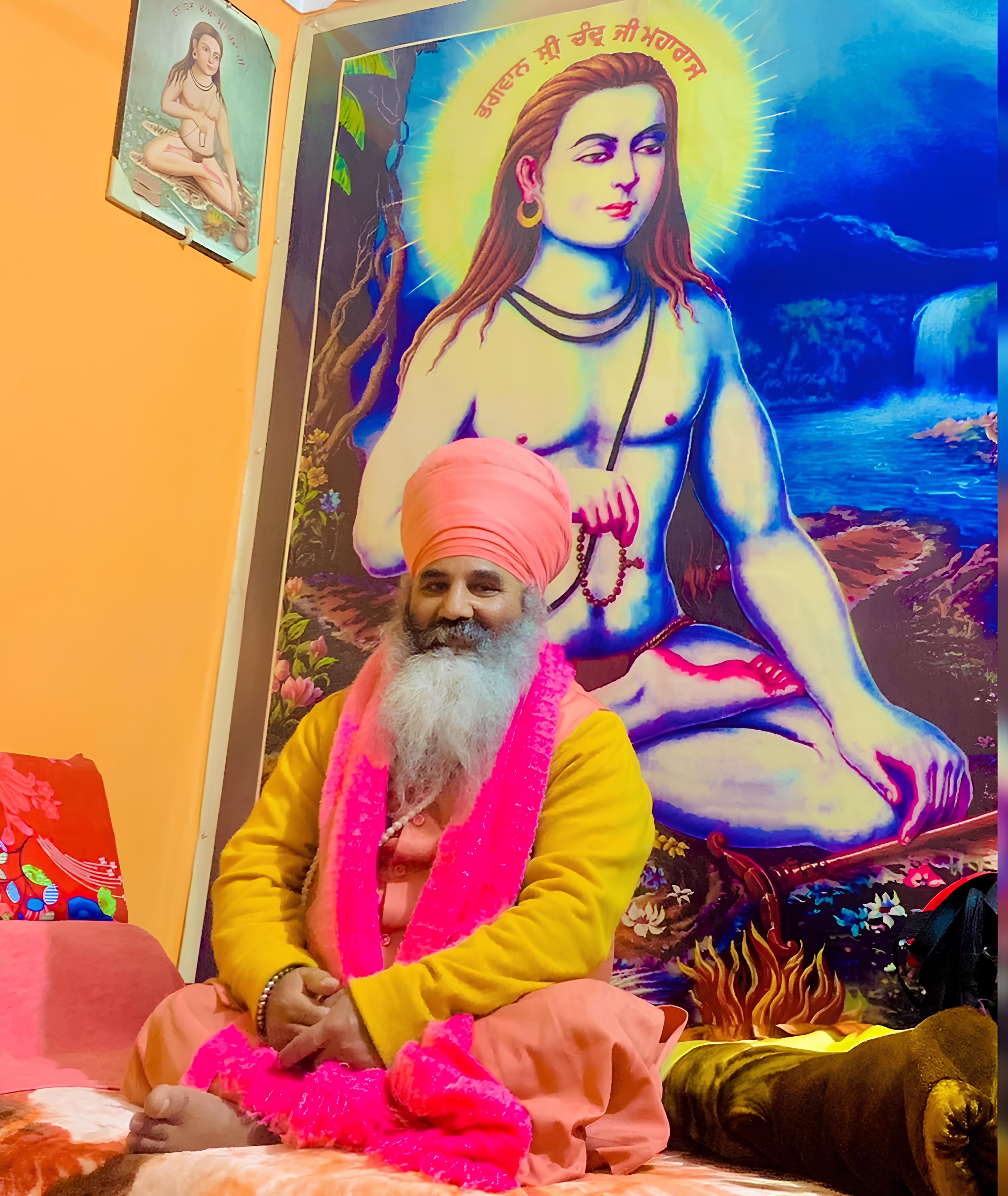
This sacred Tap Asthan was discovered by the revered Swami Dayanand Ji. He was born in Gadouri village of Kullu into a Hindu family. During his education, in his adolescence, he had a direct vision (darshan) of Baba Shri Chand Ji, who proclaimed: "I am the eldest son of Guru Nanak Dev Ji. My place is here, and this place must be revealed." At that time, Baba Ji had only read about Guru Nanak Dev Ji in his school textbook and knew nothing more about him. He did not pay heed to the vision and went on to attend college. But then he could not sleep through the night - all night he saw himself in the form of saints, until morning. This continued for several days. He sat for his college papers, but when the results came, it was found that he had not been marked present in any of the papers.
Baba Ji received the vision again, and this time the command was to accept the divine will and reveal this place. The Supreme Lord showed him this site, and from this very earth, he witnessed the divine Jyot (sacred flame). In reality, this place was then just farmland. When this was discovered, in 1988 the land was dedicated in the name of Baba Shri Chand Ji. Witnessing all this, a spirit of renunciation arose in Baba Ji's heart, and at the age of 17 he left behind all family attachments and pitched a tent at this very place. Taking nothing from home, empty-handed, Baba Ji began to live here.
The divine command was to wear His color, but Baba Ji did not know what color Baba Shri Chand Ji wore. So he continued wearing his ordinary clothes. After some time, all his clothes were found torn as if cut by scissors. An elder advised that saffron robes be arranged for him. From that day onward, Baba Ji adopted the saffron attire. Then came the command to keep long hair, but he did not agree and sat down to have his hair cut by force. Behold the miracle of the Divine - as soon as both pairs of scissors touched his head, they broke into pieces. After that, Baba Ji kept his hair, and today his matted locks (jataas) extend to nearly 7 feet. In this way, Baba Ji endured severe trials for 14 years.
Then came the command that the Guru Granth Sahib be installed here with Parkash, but Baba Ji did not know Gurmukhi. When the Parkash was performed, Baba Ji experienced divine visions and he was blessed with the ability to read Gurmukhi on his own. Such was the grace that Baba Ji began reciting all the paths in Punjabi itself.
In 1989, Baba Ji established a Dhuna (sacred fire) near the present Gurudwara. Once again he received a vision that there was an ancient place here, 8 feet below the earth, at the corner of where the Dhuna stood. From that exact spot, on 20 August 2000, the entire sangat witnessed the Jyot - the same divine light that had been appearing to Baba Ji for a long time. In reality, this Jyot was in remembrance within the earth itself. The entire sangat received the darshan of the Jyot and took the earth home as sacred prasad. Its radiance endures to this day. This glow was of the remembrance of the Divine, and by its influence the whole land began to shine. Whoever bowed their forehead here, their foreheads too began to glow.
By the immense grace of the revered Deva Ji Maharaj of Manikaran, the Kar Seva of this place began. The spot where Aatha Bhaira Sahib now stands had been sealed with stone masonry by Baba Ji, with the command that this place would reveal itself when oppression in this village would grow greatly. The Seva of this place was started on 7 September 2003 through the efforts of Sant Baba Labh Singh Ji of Qila Anandgarh Sahib. In this Seva, the revered Deva Ji Maharaj of Manikaran Sahib, along with the sangat from Kullu, Bhuntar, and Mandi, continues to offer their wholehearted support. Today, the 2-storey building of Gurudwara Sahib is nearing completion. The Langar Hall has also been built. Construction of rooms for visiting sangat is ongoing.
Daily Routine (Nitya Niyam)
The daily routine at the Gurudwara begins in the Amrit Vela (pre-dawn). The Kirtan of Asa Di Vaar starts at 6 AM, concluding at 8 AM with Aarti and Bhog. In the evening, Rehras Sahib Paath, Kirtan, and Aarti are performed. On Sunday mornings, a beautiful Diwan is held where Maharaj Ji himself comes and blesses the sangat, removing their worldly sorrows and liberating them from the cycle of birth and death.
All Gurpurbs are celebrated here with great reverence, but two occasions hold special significance:
1. Annual Day (Salana Divas)
This festival is observed on the Saturday and Sunday of the first week of August.
2. Prakash Utsav of Baba Shri Chand Ji
This fair is celebrated in September. Ragi Jathas are invited from outside, and sangat from across the country and states come to receive the blessings and joy from the abode of Maharaj Ji.
Full arrangements are made for the stay and meals of visiting sangat. The village Gurudwara Prabandhak Committee maintains all the accounts of the Gurudwara. Langar is served every Sunday, with the sangat offering selfless Seva.